As discipline.
As drive.
As passion.
As “being built differently.”
We admire the person who wakes up at 5am, who works late into the night, who squeezes productivity out of every hour, who turns exhaustion into a badge of honour.
We call it dedication.
But underneath relentless productivity, there is often something far more intimate.
Fear.
Hustle culture doesn’t just come from ambition. It often comes from a nervous system that learned early on that slowing down was unsafe.
If we look closely, many high-achieving, always-on individuals are not just motivated. They are mobilised.
And mobilisation is a survival state.
The human nervous system has one primary job: survival.
When it detects threat — whether physical, emotional, or relational — it activates the sympathetic branch. This is the fight-or-flight response. Energy increases. Heart rate rises. Muscles tense. Focus sharpens.
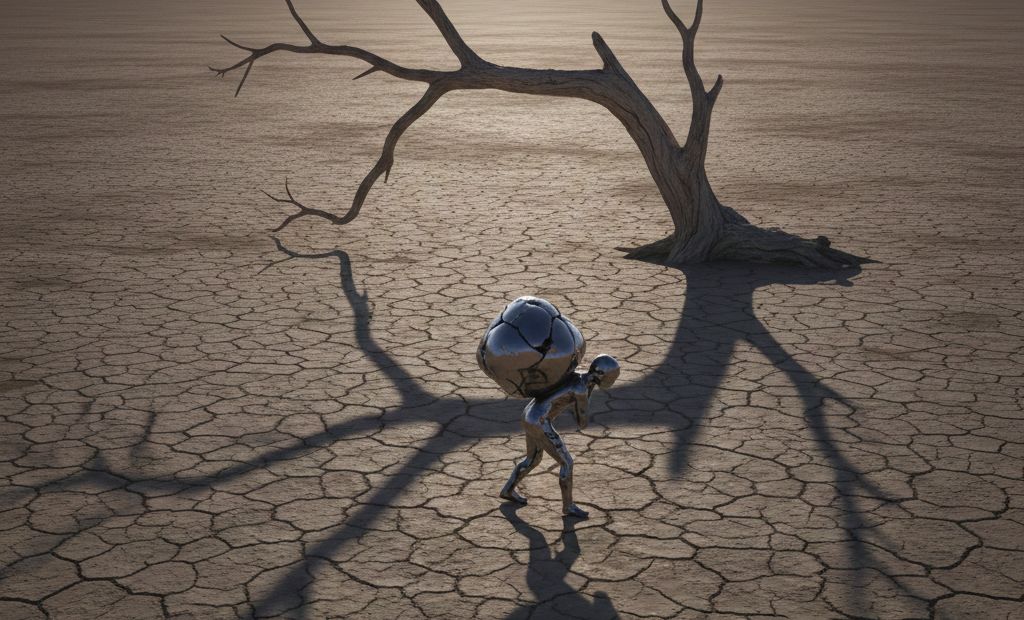
This state is not designed for long-term living. It is meant for short bursts of action.
But when stress becomes chronic — when unpredictability, criticism, instability, or emotional neglect shape early experiences — the nervous system adapts. It stays activated.
For some people, that activation becomes anxiety.
For others, it becomes productivity.
Constant doing.
Constant striving.
Constant improvement.
From the outside, it looks impressive.
From the inside, it often feels like pressure.
Many people who struggle to slow down learned early that love was linked to performance.
Praise came when they succeeded.
Approval followed achievement.
Attention arrived when they excelled.
Even subtle patterns — a parent who lit up when grades were high but withdrew when they weren’t — teach the nervous system something powerful:
Being impressive equals safety.
Being average equals risk.
The child internalises this not as a belief but as a bodily imprint. The nervous system pairs accomplishment with connection.
Over time, the body doesn’t just want to achieve.
It needs to.
Because achievement feels like attachment security.
If you ask someone entrenched in hustle culture what would happen if they stopped, the answer is rarely neutral.
Underneath these fears is often something even deeper:
“If I stop producing, who am I?”
For many high achievers, identity fused with productivity long ago.
Rest threatens not just routine — but self-concept.
And when identity feels unstable, the nervous system activates.
Hustle culture often overlaps with hyper-independence.
“I don’t need anyone.”
“I’ll handle it myself.”
“I can’t rely on others.”
These statements are often survival adaptations.
If early caregivers were inconsistent or unavailable, the child learns to rely on self-sufficiency. Needing others may have led to disappointment or rejection.
So the nervous system redirects attachment energy into competence.
Achievement becomes the substitute for relational security.
Work becomes safer than intimacy.
Because work is controllable.
People are not.
Productivity creates structure.
Structure reduces unpredictability.
And unpredictability is deeply unsettling to a trauma-shaped nervous system.
When you fill every hour, you eliminate uncertainty.
When you control outcomes, you reduce the chance of surprise.
Hustle becomes a way of stabilising internal chaos.
It gives the nervous system a sense of mastery.
But mastery is not the same as safety.
And eventually, the body pays the price.
Burnout is often treated as poor time management.
Or lack of resilience.
But biologically, burnout is the nervous system collapsing after prolonged sympathetic activation.
The body cannot sustain constant mobilisation indefinitely.
At some point, the system shifts into dorsal vagal shutdown.
This may look like:
Ironically, the very system that drove achievement begins to fail.
And when identity is tied to productivity, this collapse feels catastrophic.
Not just physically — but existentially.
Another layer of hustle culture is emotional avoidance.
Stillness allows feelings to surface.
Grief.
Loneliness.
Fear.
Shame.
If early emotional experiences were overwhelming or unsupported, the nervous system may associate stillness with danger.
So you stay busy.
Not because you love being busy — but because stopping feels intolerable.
Work becomes a distraction from internal states.
Achievement becomes a numbing agent.
The problem is that suppressed emotion does not disappear.
It accumulates.
Modern society rewards trauma responses.
We praise overwork.
We glamorise exhaustion.
We equate busyness with importance.
This cultural validation makes it difficult to question the pattern.
If the world applauds your coping strategy, why would you examine it?
But just because a pattern is normalised does not mean it is healthy.
When nervous systems shaped by stress enter environments that celebrate constant output, the cycle intensifies.
Trauma meets capitalism.
And hustle culture thrives.
One of the first casualties of hustle culture is interoception — the ability to sense internal bodily needs.
You ignore hunger cues.
You override fatigue.
You dismiss tension.
You push through illness.
The body sends signals.
But the drive to achieve overrides them.
Over time, this disconnection grows.
You may struggle to identify what you want outside of work.
You may feel lost without goals.
You may not know how to rest without guilt.
This is not weakness.
It is a nervous system that has prioritised survival over self-awareness.
Shame is a powerful driver of overwork.
“I have to prove myself.”
“I can’t fall behind.”
“I need to show my worth.”
Shame activates threat circuitry in the brain.
And one way to reduce shame is to achieve.
Achievement temporarily soothes the internal critic.
But because shame is rarely resolved through performance, the relief is short-lived.
So the cycle continues.
More work.
More proving.
More striving.
Underneath it all is a fear of being “not enough.”
For someone whose nervous system is conditioned for mobilisation, rest can feel threatening.
The body may become restless when slowing down.
Anxiety may rise.
You may feel unproductive, useless, or exposed.
This reaction is biological.
When the sympathetic system has been dominant for years, the parasympathetic shift can feel unfamiliar.
Familiar does not equal safe.
It simply means known.
If chaos and pressure were known, they may feel more comfortable than calm.
Hustle culture equates strength with endurance.
But true nervous system strength is flexibility.
The ability to mobilise when needed.
And settle when safe.
Many high achievers are excellent at mobilisation.
Few are practiced at settling.
Healing is not about abandoning ambition.
It is about untangling ambition from fear.
It is about allowing productivity to be choice rather than compulsion.
Recovering from hustle-driven trauma is not about quitting your career.
It is about recalibrating your nervous system.
This begins with noticing.
When do you feel urgency that is disproportionate?
When does rest trigger anxiety?
When does achievement feel like relief rather than joy?
These questions reveal where survival is still operating.
Somatic practices — grounding, breath regulation, tracking bodily sensations — rebuild connection to internal states.
Boundaries reduce chronic activation.
Safe relationships offer co-regulation.
Over time, the nervous system learns that worth is not contingent on output.
That safety is not earned through exhaustion.
That identity can exist beyond productivity.
Initially, slowing down may increase discomfort.
Old emotions surface.
The inner critic becomes louder.
The urge to fill space intensifies.
This is not failure.
It is withdrawal from constant activation.
As the nervous system adjusts, something shifts.
Creativity becomes less pressured.
Work becomes more intentional.
Rest feels restorative rather than threatening.
Achievement feels satisfying rather than compulsory.
Hustle culture is not just a societal phenomenon.
It is a nervous system adaptation that has been collectively reinforced.
Behind relentless striving is often a body that once learned:
Understanding the trauma behind hustle does not diminish ambition.
It liberates it.
When your nervous system no longer equates productivity with survival, you can choose when to push and when to pause.
You can work from inspiration rather than fear.
You can rest without shame.
And perhaps most importantly, you can discover that your worth was never dependent on how much you produced.
It was inherent all along.
The work now is not to hustle harder.
It is to feel safe enough to stop.