

There is a place inside you where life feels manageable.
Where you can think clearly, respond instead of react, breathe fully, and stay present.
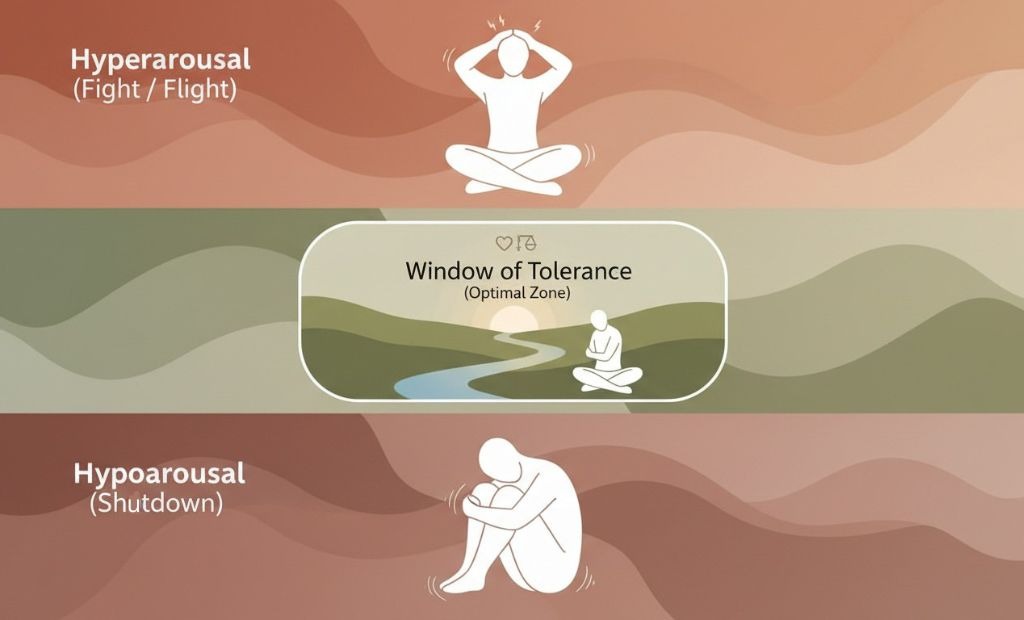
This place is called your Window of Tolerance — a concept from Dr. Dan Siegel that describes the zone where your nervous system feels regulated and safe enough to function well.
When you’re inside the window, you feel like you.
When you’re outside of it, everything feels harder.
What Is the Window of Tolerance?
Imagine your nervous system is a road.
Inside your Window of Tolerance, the road is wide, clear, and steady — you can change lanes, slow down, or speed up without losing control.
But when stress, conflict, emotions, triggers, or fatigue push you outside the window, the road suddenly shrinks.
 Speed up too much — anxiety, overwhelm, irritability
 Shut down too much — numbness, disconnection, exhaustion
Your Window of Tolerance is the zone where your system feels balanced enough to stay engaged with life.
The Three Nervous System States
Inside the Window (Optimal Zone)
- Grounded
- Open
- Present
- Curious
- Able to think and feel at the same time
Life feels doable.
Above the Window: Hyperarousal
This is the fight-or-flight state.
- Anxiety
- Racing thoughts
- Restlessness
- Anger or panic
- Tight chest or shallow breathing
Below the Window: Hypoarousal
This is freeze or shut-down.
- Numbness
- Fatigue
- Disconnection
- Low motivation
- Difficulty making decisions
Why Your Window of Tolerance Shrinks
Your window is shaped by:
- Childhood experiences
- Trauma
- Chronic stress or burnout
- Relationship wounds
- Lack of rest, safety, or support
A small window doesn’t mean you are unstable.
It means your nervous system learned to protect you.
The window can expand.
How It Shows Up in Everyday Life
Inside the Window
- You can handle tough conversations
- You feel emotions without drowning
- You stay present with loved ones
- Your reactions match the moment
Outside the Window
Hyperarousal examples:
- Chest tightens at “we need to talk”
- Overthinking
- Snapping easily
Hypoarousal examples:
- Mind goes blank during conflict
- Procrastination
- Emotional shutdown
A Metaphor to Understand It
Think of your Window of Tolerance like a river.
- Inside the window: floating, swimming, engaged
- Hyperarousal: fighting the current
- Hypoarousal: sinking quietly to the riverbed
The goal isn’t to stay calm forever —
it’s to notice where you are and guide yourself back.
How to Return to Your Window of Tolerance
If You’re Above the Window
- Long exhales
- Humming or sighing
- Pressing feet into the floor
- Cold sensations
- Orienting to your surroundings
If You’re Below the Window
- Gentle movement
- Warm showers or tea
- Music
- Stepping outside
- Connecting with someone safe
To Expand Your Window Over Time
- Consistent rest
- Co-regulation
- Somatic therapy
- Mindful movement
- Emotional attunement
A Compassionate Reframe
You are not moody, too sensitive, lazy, dramatic, or broken.
You are a nervous system doing its best to survive.
Your reactions are learned protection — not personal flaws.
A Simple Daily Practice
Ask yourself:
“Where am I right now — inside, above, or below my window?”
Then respond accordingly.