

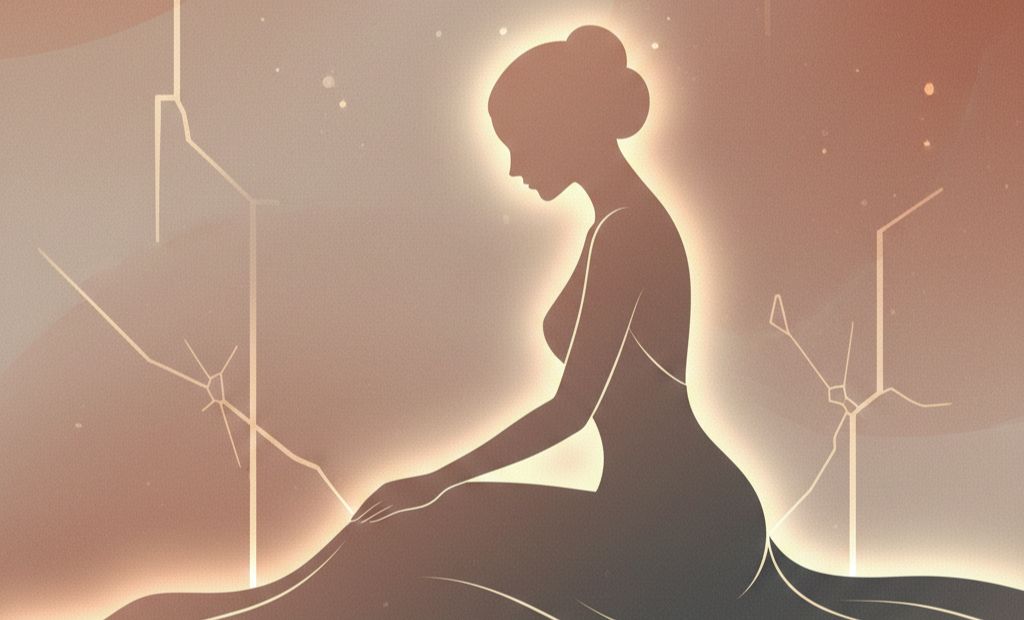
A journey into one of the most misunderstood emotional wounds.
1. The Origins of the Wound of Injustice
Every wound has an origin story. The wound of injustice usually begins quietly — in childhood moments that don’t look damaging from the outside.
- A teacher scolds you for something you didn’t do.
- A parent blames you because they’re overwhelmed.
- A sibling is protected while you’re punished.
- A mistake becomes a moral failure.
- Your “why” doesn’t matter. Your truth doesn’t land.
And in your small body, something shifts — not just the hurt, but the meaning of the hurt.
- “The world is not fair.”
- “I have to stay alert.”
- “No one is coming to set things right.”
That meaning becomes a blueprint.
2. The Inner Landscape It Creates
The wound of injustice doesn’t only live in memory — it lives in the nervous system. It shows up as:
- a tightening in the jaw
- a bracing in the spine
- a breath that doesn’t fully drop
- a sense that you must explain yourself
- a fear of being misunderstood
- an urge to be perfect
- a low-burning anger with no name
This is not personality. This is adaptation.
Your body carries the imprint of every moment you weren’t believed, protected, or treated fairly.
3. Patterns That Follow You Into Adulthood
The wound travels with you. It shapes how you respond long before you “think.” Here’s how it often shows up:
A. Hyper-Responsibility
You take on too much because being blamed feels worse than being exhausted.
B. Quick Anger at Broken Promises
Not because you’re impatient — because inconsistency once meant danger.
C. Sensitivity to Tone, Words, Interpretation
Misunderstanding doesn’t just bother you — it rattles your foundation.
D. Pressure to Be Impeccable
If you’re perfect, no one can accuse you of anything.
E. Difficulty Letting Go of Unfair Experiences
Your nervous system keeps the file open, waiting for justice that never came.
F. Being “The Strong One”
Strength became your shield — and your identity.
G. Hidden Grief Beneath the Anger
Anger says, “This isn’t fair.” Grief says, “It should’ve been different.” Both are true.
4. A Scene You Might Recognise
Picture this: someone speaks to you sharply. Their tone is off. Their words feel loaded. You immediately feel heat rise in your chest, or your stomach drop, or your jaw tighten.
You replay it for hours:
- Why did they say it like that?
- Did I do something wrong?
- Why does this bother me so much?
- Why can’t I just let it go?
Your reaction isn’t to this moment — it’s to the echo of every unfair moment before it. Your body is not overreacting. Your body is remembering.
5. The Anger No One Sees
The wound of injustice holds a specific kind of anger:
- the anger of not being defended
- the anger of being blamed unfairly
- the anger of holding adult responsibilities as a child
- the anger of being misread or misrepresented
- the anger of wanting protection that never came
Anger is the body’s way of saying: “A boundary was crossed.” When a child’s anger is punished or ignored, it doesn’t disappear — it goes underground.
In adulthood, it resurfaces as:
- irritation
- overthinking
- resentment
- shutdown
- stonewalling
- perfectionism
- silent storms
6. What This Wound Secretly Teaches You to Believe
You may never say these sentences out loud, but the wound whispers them internally:
- If I am not perfect, I’ll be blamed.
- No one will protect me, so I must take care of everything.
- If I don’t explain myself, I’ll be misunderstood.
- If I don’t stay strong, I’ll lose control.
- If I don’t work twice as hard, I won’t be taken seriously.
- Fairness is never guaranteed.
7. The Turning Point: Recognizing the Wound
Healing begins the moment you name it.
Some reactions are echoes. Some emotions are inherited. Some wounds are ancient.
Recognition creates space. Space creates choice. Choice creates healing.
8. How the Wound Starts to Heal
A. Feeling Your Anger Safely
Not exploding. Not suppressing. Feeling it and letting it move through your body.
B. Rebuilding Trust in Your Inner Voice
You learn to say things like: “I felt dismissed,” or “That didn’t sit right with me,” without collapsing or attacking.
C. Experiencing Fairness in Real Time
Healing happens when someone listens, clarifies, repairs, apologizes sincerely, or respects your boundaries.
D. Softening the Armor
It happens slowly — breath by breath, moment by moment.
E. Allowing Yourself to Need Support
Each time you receive support, your system learns: “I don’t have to hold everything alone anymore.”
9. You Are Not the Wound — You Are the One Who Survived It
The wound of injustice doesn’t mean you’re angry or reactive. It means you care deeply about truth, fairness, and integrity.
You survived environments that didn’t honor your experience. Your reactions make sense. Your boundaries make sense. Your sensitivity makes sense.
You’re not “too much.”
You’re someone who grew up without fairness — and now craves the balance that was missing.
That craving is not a flaw. It’s wisdom.